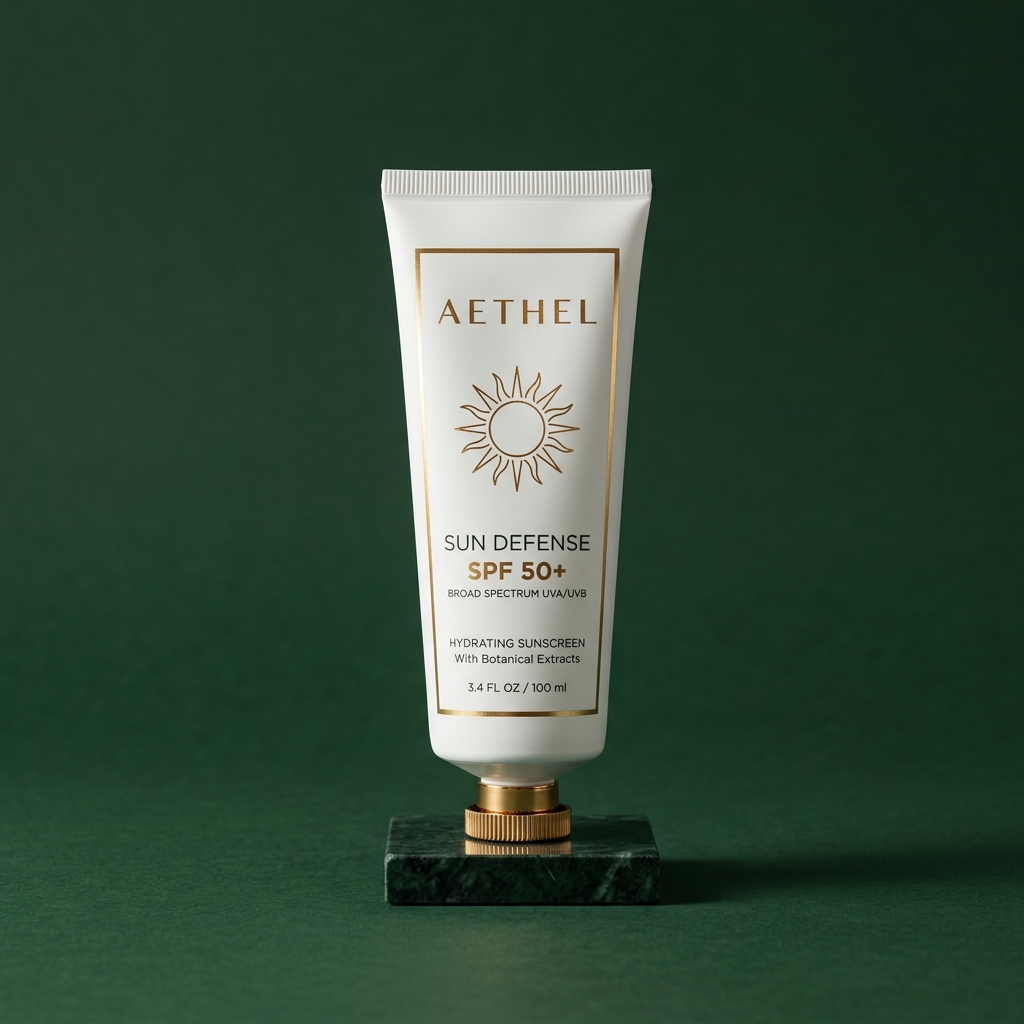
Sunscreen is the single highest-return product in skincare. It prevents the majority of visible skin aging, reduces skin cancer risk, and protects the results of every other product you use.
It is also surrounded by more persistent misinformation than almost any other skincare category — some of it spread by well-meaning people, some by marketing, and some by genuine confusion about how SPF numbers work.
This guide addresses the myths that come up most often, what the evidence actually shows, and the practical implications for how you use sunscreen.
The Golden Rule
The best sunscreen isn’t the one with the highest SPF rating or the most elegant mineral filters. The best sunscreen is the one you actually enjoy applying every single day.
You Only Need Sunscreen When It Is Sunny
UVA radiation, which is primarily responsible for photoaging, remains relatively constant throughout daylight hours and penetrates cloud cover.
Cloud cover reduces UVB — the wavelength that causes sunburn — considerably more than UVA. This creates a misleading situation: on an overcast day you may not burn, which feels like evidence you were not exposed. But the radiation driving collagen breakdown and pigmentation was still reaching your skin.
Practical implication: daily application regardless of weather. The absence of sunburn is not evidence of protection.
You Do Not Need Sunscreen Indoors
this one requires nuance rather than a flat answer.
UVA penetrates standard window glass. UVB largely does not. So if you sit near a window during daylight hours, you are receiving meaningful UVA exposure — the wavelength most associated with photoaging and pigmentation.
If you are in an interior room with no window exposure, the case for sunscreen is genuinely weak.
Practical implication: if you work near a window, drive during daylight, or spend time in rooms with significant natural light, daily sunscreen is worthwhile. In a windowless environment, it matters far less. The frequently repeated claim that indoor lighting requires sunscreen protection is not well supported.
Higher SPF Is a Marketing Gimmick
the returns diminish, but they are not zero.
Under laboratory conditions and correct application:
- SPF 15 filters approximately 93% of UVB
- SPF 30 filters approximately 97%
- SPF 50 filters approximately 98%
Stated that way, higher SPF looks pointless. But there is a more useful framing: SPF 30 lets through roughly 3% of UVB, while SPF 50 lets through roughly 2% — meaning SPF 30 permits about 50% more UVB exposure than SPF 50.
The more important factor is real-world application. Laboratory SPF testing uses 2 mg per square centimetre of skin. Most people apply substantially less — often a quarter to half of that. Under-applying an SPF 50 may deliver protection closer to the SPF 20-25 range.
Practical implication: higher SPF provides a buffer against inevitable under-application. SPF 30 is the reasonable minimum; SPF 50 offers meaningful additional margin.
Mineral Sunscreen Is Safer Than Chemical
both categories are considered safe by major regulatory bodies. The distinction is largely about tolerability and cosmetic preference, not safety.
Mineral filters — zinc oxide and titanium dioxide — sit largely on the skin surface and are generally better tolerated by sensitive and reactive skin. They can leave a white cast, though modern formulations have improved considerably.
Chemical filters — avobenzone, octinoxate, octocrylene, and newer-generation filters available in some markets — absorb UV radiation. They are typically more cosmetically elegant with no white cast, but can sting sensitive skin, particularly around the eyes.
Some chemical filters have been studied for systemic absorption, and research on this continues. Current regulatory consensus in major markets remains that approved filters are safe at recommended use levels.
Practical implication: choose based on what your skin tolerates and what you will actually use daily. A mineral sunscreen you dislike wearing protects you less than a chemical one you apply every morning.
Sunscreen Causes Vitamin D Deficiency
studies examining regular sunscreen users have generally not found significant vitamin D deficiency attributable to sunscreen use.
Several factors explain this. Sunscreen does not block all UVB — even correctly applied SPF 30 permits a small percentage through. Most people apply less than the tested amount and miss areas entirely. And the exposure required for vitamin D synthesis is brief and modest.
Practical implication: if you have low vitamin D — which is common for many reasons including latitude, season, skin tone, and time spent indoors — supplementation is a far safer approach than deliberate unprotected sun exposure. This is worth discussing with a doctor rather than self-managing through sun exposure.
Darker Skin Does Not Need Sunscreen
higher melanin content does provide some baseline photoprotection — estimated at roughly SPF 13 or lower depending on the source. That is meaningful but well below the recommended minimum.
More importantly, melanin provides limited protection against the pigmentary consequences of UV exposure. Post-inflammatory hyperpigmentation and melasma affect people with deeper skin tones disproportionately, and both are worsened by sun exposure.
Skin cancer also occurs in people with darker skin. It is less common but frequently diagnosed at a later stage, which is associated with worse outcomes.
Practical implication: sunscreen matters for all skin tones. For those with deeper skin tones concerned about white cast, tinted mineral formulations and modern chemical filters offer better cosmetic outcomes than older mineral products.
Makeup With SPF Is Enough
foundation or powder with SPF 20-30 sounds adequate, but the SPF rating assumes application at 2 mg/cm² — a quantity of foundation nobody actually wears. Achieving the stated SPF from a foundation would require several times a normal application.
Setting powders with SPF have the same limitation, with the additional problem of uneven coverage.
Practical implication: treat SPF in makeup as a small bonus rather than your protection. Apply dedicated sunscreen underneath.
One Morning Application Lasts All Day
this depends heavily on your circumstances, and the standard "reapply every two hours" advice is often applied too broadly.
Reapplication genuinely matters when: you are outdoors for extended periods, swimming or sweating, or towelling your face. Physical removal is the main reason to reapply.
Reapplication matters less when: you are indoors most of the day with limited window exposure and are not touching your face or sweating.
Some chemical filters do degrade with UV exposure, though modern formulations include stabilizers that substantially reduce this.
Practical implication: reapply every two hours during meaningful sun exposure. For a typical indoor day, a single well-applied morning application is generally reasonable. Being realistic about this matters more than a rule people abandon because it is impractical.
Sunscreen Causes Acne and Clogged Pores
some sunscreens do cause breakouts in acne-prone skin, but this reflects specific formulations rather than sunscreen as a category.
Heavy occlusive bases, certain emollients, and thick water-resistant formulas can contribute to congestion. Fragrance can cause reactions mistaken for breakouts.
Practical implication: if sunscreen breaks you out, the answer is a different sunscreen rather than no sunscreen. Look for lightweight fluid textures, gel formulations, or products labelled non-comedogenic. Zinc oxide has some research support for anti-inflammatory properties relevant to acne-prone skin.
Blue Light From Screens Requires Sunscreen
this claim has been heavily marketed, and the evidence does not support the level of concern being promoted.
Research on visible light and pigmentation does exist, and it suggests visible light — particularly in combination with UVA — can contribute to pigmentation in melasma-prone skin. But the studies involved light intensities far exceeding what screens emit.
The visible light reaching you from a laptop is orders of magnitude weaker than daylight. Sunlight coming through your window during a workday is the more relevant exposure by a wide margin.
Practical implication: if you have melasma, tinted sunscreens containing iron oxides offer some visible light protection and are worth considering. For everyone else, "blue light protection" claims are largely marketing. Sunscreen for daylight exposure, including through windows, is the meaningful intervention.
Waterproof Sunscreen Exists
regulatory bodies in most markets no longer permit "waterproof" or "sweatproof" claims because no sunscreen fully resists water.
What exists is water-resistant, tested for either 40 or 80 minutes of water exposure. After that period, protection is meaningfully reduced.
Practical implication: check the stated water-resistance duration and reapply after swimming, sweating heavily, or towelling — regardless of the number of minutes on the label.
If You Are Already Tanned, You Are Protected
a tan is your skin's response to DNA damage. Melanin production increases as a protective response, which means the tan is evidence that damage has already occurred.
The protection a tan provides is minimal — estimated at approximately SPF 3-4, far below the recommended minimum.
Practical implication: a tan is not a substitute for sunscreen. It is a record of prior exposure.
Weather Warning
UVA rays penetrate effortlessly through thick cloud cover and window glass. If you don’t need a flashlight to see, you need sunscreen.
What to do
- Apply daily: Rain or shine, indoors or outdoors.
- Use enough product: Aim for 1/4 teaspoon for your face.
- Reapply: Every 2 hours of direct sun exposure.
- Choose SPF 30+: This is the minimum recommended by derms.
What to avoid
- Relying on makeup SPF: You never apply enough foundation to get the labeled protection.
- Skipping your neck: The neck and ears are prime spots for sun damage.
- Thinking dark skin is immune: Everyone needs UV protection.
What Actually Matters Most
Stepping back from individual myths, the practical priorities are simpler than the volume of sunscreen discourse suggests.
1. Apply enough. Under-application is the most common and most consequential mistake. Roughly a quarter teaspoon for the face, or the two-finger method.
2. Apply it daily. Consistency matters more than the specific product. Daily SPF 30 outperforms occasional SPF 50.
3. Choose something you will actually use. Texture and finish determine adherence. This is not a trivial consideration — it is the main determinant of whether sunscreen protects you.
4. Cover the areas people miss. Ears, hairline, eyelids, neck, back of hands, and the sides of the face.
5. Use it alongside other measures. Shade, hats, sunglasses, and clothing are effective and reduce the burden on sunscreen alone.
6. Do not let perfect be the enemy of good. A sunscreen applied imperfectly every day protects you far better than an optimal routine you abandon.
SPF Math
SPF 30 is not twice as protective as SPF 15. The curve of protection flattens out, meaning high numbers offer only marginally more defense.
How to Actually Apply Sunscreen Correctly
Since under-application undermines everything else, this deserves specific attention.
How much
The two-finger method: squeeze a line of sunscreen along the full length of your index and middle fingers. That is roughly the amount needed for face and neck.
The quarter-teaspoon method: approximately 1.25 ml for the face alone, with additional product for the neck.
For the body: roughly 30 ml — about a shot glass — for full body coverage in swimwear.
Most people apply between a quarter and a half of these amounts. If you have never measured, it is worth doing once to calibrate what adequate coverage actually looks and feels like.
The areas people consistently miss
- Ears, particularly the tops and behind them
- Hairline and part line, where scalp is exposed
- Eyelids, where skin is thinnest and skin cancers do occur
- Under the eyes, right up to the lash line
- Sides of the face and in front of the ears
- Neck, front and back
- Back of the hands, which show photoaging early
- Lips, which need an SPF balm rather than facial sunscreen
Timing and technique
Apply as the last step of your morning skincare, after moisturizer has absorbed.
Allow a few minutes to set before applying makeup. Rushing this causes pilling.
Apply evenly rather than rubbing thin. Pat or press it in rather than aggressively spreading, which distributes it too thinly.
Do not skip the second layer if you missed spots. A patchy application leaves unprotected areas.
Apply before dressing if using body sunscreen, so clothing edges do not create gaps.
Choosing a Sunscreen You Will Actually Use
Because adherence is the deciding factor, product selection is worth more thought than it usually gets.
For oily skin: fluid or gel textures with a matte finish. Look for lightweight silicone bases and avoid heavy emollients.
For dry skin: cream or lotion formats with added hydrating ingredients. A moisturizing sunscreen can sometimes replace a separate moisturizer.
For sensitive skin: mineral filters — zinc oxide and titanium dioxide — with fragrance-free formulation. These generally cause less stinging than chemical filters.
For acne-prone skin: non-comedogenic fluid textures. Zinc oxide has some anti-inflammatory research behind it that may be relevant.
For deeper skin tones: modern chemical filters or tinted mineral formulations avoid the white cast that older mineral sunscreens produce. Tinted options containing iron oxides have the additional benefit of some visible light protection.
For melasma: tinted formulations with iron oxides offer protection against visible light, which is relevant for this condition specifically.
For use under makeup: lightweight, quick-absorbing formulas that do not pill. Test compatibility with your foundation before committing to a full bottle.
A practical suggestion: buy small sizes when trying new sunscreens. Finding one you genuinely like is worth several failed attempts, and small sizes make that experimentation affordable.
Sun Protection Beyond Sunscreen
Sunscreen is the most discussed form of sun protection, but it is not the most effective one on its own. Treating it as a single solution places more burden on it than any product can carry.
Shade is the most reliable protection available and costs nothing. Seeking shade during peak UV hours — generally late morning through mid-afternoon — reduces exposure more than any product.
Clothing provides consistent protection that does not wear off, wash away, or require reapplication. Tightly woven fabrics and darker colours block more UV than loose, light ones. Garments with a UPF rating offer verified protection levels.
A wide-brimmed hat protects the face, ears, and neck simultaneously — including the areas people most commonly miss with sunscreen. A brim of several inches provides meaningfully more coverage than a baseball cap, which leaves ears and neck exposed.
Sunglasses with UV protection matter for the eyes themselves and for the delicate skin around them, where sunscreen application is often incomplete.
Checking the UV index is genuinely useful and available in most weather apps. It accounts for time of day, season, latitude, altitude, and cloud cover in a single number, which is more informative than looking outside and guessing.
Being aware of reflective surfaces matters more than most people realize. Water, sand, snow, and concrete all reflect UV upward, increasing exposure to areas that would otherwise be shaded — including under a hat brim.
The most effective approach combines these rather than relying on any single one. Sunscreen covers what shade and clothing cannot.
Frequently Asked Questions
Do I need sunscreen if I work indoors? If you sit near a window, yes — UVA penetrates glass. In a windowless interior space, the case is much weaker.
Is SPF 100 better than SPF 50? The laboratory difference is marginal. Higher SPF mainly provides a buffer against under-application. SPF 50 is a reasonable practical ceiling.
Does sunscreen expire? Yes. Check the expiry date, and note that heat exposure — a car glovebox, for instance — degrades filters faster than the date suggests.
Can I mix sunscreen with moisturizer? Not recommended. Dilution reduces the protection factor unpredictably. Apply moisturizer first, let it absorb, then sunscreen.
Should I reapply sunscreen over makeup? It is difficult but possible with powder or spray formats. These are typically applied more thinly than a full application, so treat them as topping up rather than a full reapplication.
Does sunscreen prevent existing dark spots from fading? The opposite — sunscreen is what allows brightening treatments to work. Without it, new pigmentation forms faster than treatments can fade existing spots.
Is a higher PA rating important? PA ratings indicate UVA protection, primarily used in Asian markets. Higher ratings mean better UVA protection, which is relevant for photoaging and pigmentation. In markets using “broad-spectrum” labelling instead, that term serves a similar purpose.
Can I use body sunscreen on my face? You can, though body formulations are often heavier and more likely to cause congestion. If it does not break you out, it works.
How Long Does It Take for Skincare Products to Actually Work?
A realistic dermatological timeline for when to expect visible results from your skincare.
Read More →"The best sunscreen isn't the one with the highest SPF rating. The best sunscreen is the one you actually enjoy applying every single day." — Skincare Golden Rule
The Bottom Line
Most sunscreen misinformation shares a common thread: it provides a reason not to bother. It is cloudy, you are indoors, you already have a tan, your makeup has SPF, higher numbers are a scam.
The evidence points consistently in one direction. UV exposure is the largest modifiable contributor to visible skin aging and a primary risk factor for skin cancer. Daily broad-spectrum sunscreen at SPF 30 or above, applied in sufficient quantity, is the most effective skincare intervention available.
If you take three things from this:
- Apply more than you think you need — under-application undermines everything else
- Apply daily, including cloudy days and near windows
- Choose a formula you genuinely do not mind wearing — the best sunscreen is the one you use
Everything else in your routine works better when protected. Nothing else you buy comes close to the return.
This article is for informational purposes only and does not constitute medical advice. If you have concerns about a mole, skin lesion, vitamin D levels, or a specific skin condition, consult a board-certified dermatologist or your doctor.
Was this article helpful?

Anam Ahsan
Founder & Editor-in-ChiefI started Glam Rock Web because I was tired of beauty content that read like advertising. Everything published here is researched, tested where possible, and written to be useful — not to sell you something.



Comments (24)
Hannah W.
2 days agoThis guide saved me so much money — went with the budget pick and honestly can't tell the difference from serums twice the price!
Anam Ahsan Author
1 day agoSo glad it worked out for you, Hannah! That's exactly the kind of result we hoped readers would see.