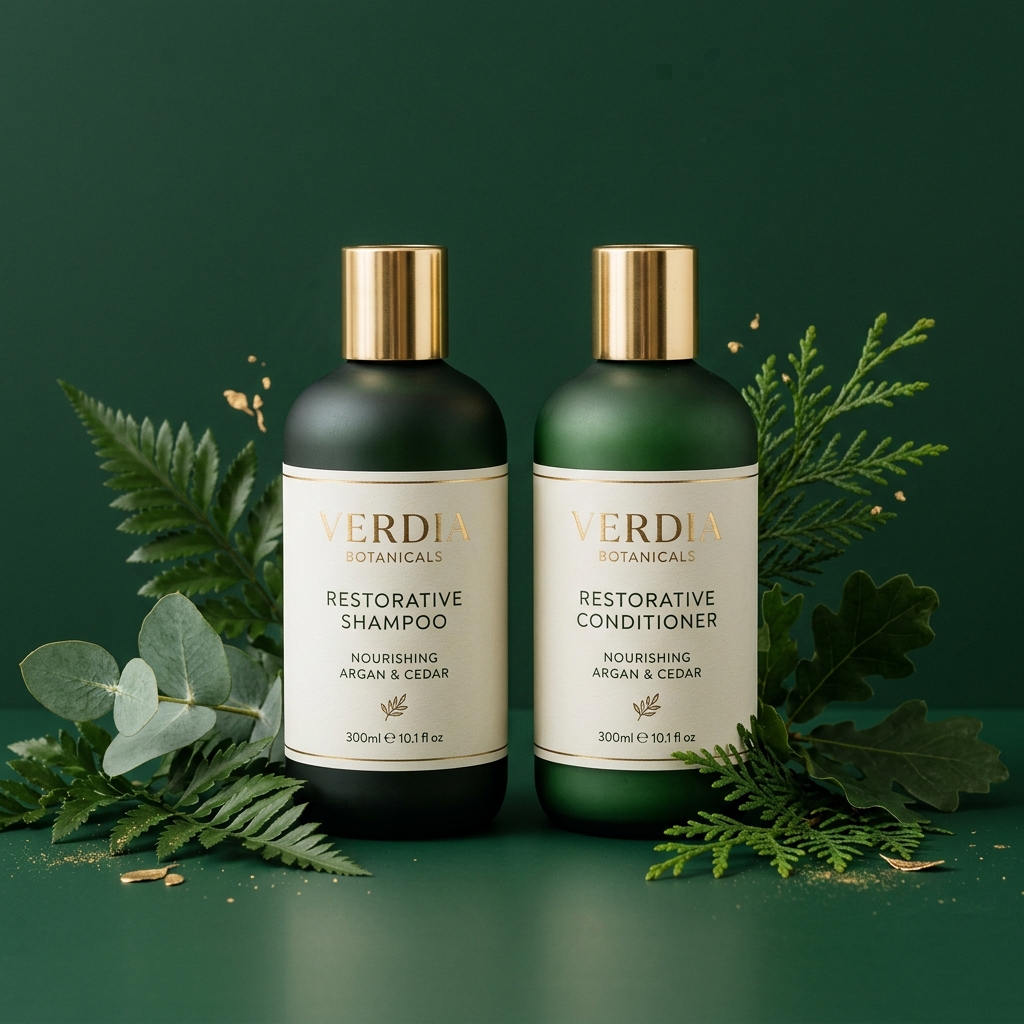
Walk down any haircare aisle and you will find “silicone-free” printed across bottles in the same confident typeface once reserved for “sulfate-free” and “paraben-free.” The implication is clear: silicones are something you should be avoiding.
But the actual picture is considerably more nuanced than the marketing suggests. Silicones are neither the villain they have been made into nor universally harmless. Whether they help or hinder depends on your hair type, your scalp condition, which specific silicone is involved, and how you wash your hair.
This guide covers what silicones actually do, what the “buildup” concern really means, who genuinely benefits from avoiding them, and who is switching for no reason.
The Practical Takeaway
Silicones aren’t inherently bad, but if you have fine hair that gets weighed down easily or curly hair that repels moisture, going silicone-free can completely transform your texture.
Styling Secret
If you eliminate silicones from your shampoo but keep using silicone-heavy styling serums, you will still experience buildup. The transition must be holistic.
What to do
- Clarify first: Use a clarifying shampoo to remove existing buildup before switching.
- Be patient: Expect a 2-4 week transition period.
- Use natural oils: Argan or jojoba oil for natural shine.
What to avoid
- Silicone styling products: Don't ruin the effort with a silicone-heavy serum.
- Instant expectations: Your hair might feel rough at first.
- Over-washing: Let your scalp adjust its oil production.
What Are Silicones in Haircare?
Silicones are synthetic polymers derived from silica. In haircare, they function primarily as conditioning agents that coat the hair shaft, and they are remarkably good at what they do.
What silicones actually accomplish:
- Smooth the cuticle — hair’s outer layer consists of overlapping scales. Silicones lay these flat, which reduces friction between strands.
- Add slip — this makes detangling significantly easier and reduces mechanical breakage from combing and brushing.
- Create shine — a smoothed cuticle reflects light more uniformly.
- Reduce frizz — by forming a hydrophobic barrier that limits humidity absorption.
- Provide heat protection — silicones are a common component of heat protectant products for good reason.
- Reduce moisture loss — the coating slows water evaporation from the hair shaft.
These are genuine functional benefits, not marketing claims. Silicones became ubiquitous in haircare because they work.
Not all silicones behave the same way
This is the detail most “silicone-free” marketing omits entirely, and it matters enormously.
| Silicone type | Examples | Water solubility | Buildup risk |
|---|---|---|---|
| Non-soluble | Dimethicone, cyclopentasiloxane | Not water soluble | Higher |
| Partially soluble | Amodimethicone | Partially | Moderate, but binds selectively |
| Water soluble | PEG-modified silicones (e.g. PEG-12 dimethicone) | Yes | Minimal |
| Evaporating | Cyclomethicone, cyclopentasiloxane | Evaporates | Very low |
A quick identification guide:
- Ingredients ending in -cone, -conol, -silane, or -siloxane are silicones
- Names beginning with PEG- are generally water soluble and rinse out easily
- Cyclo- prefixed silicones are volatile and evaporate rather than accumulating
Lumping all of these together under one warning label is a bit like warning people to avoid “acids” without distinguishing between hyaluronic acid and hydrochloric acid.
Label Reading
Remember that any ingredient ending in ‘-cone’, ‘-conol’, or ‘-siloxane’ is a silicone. They hide in plain sight on the ingredient list.
The Buildup Question: What Is Actually True
The central argument against silicones is that they accumulate on the hair shaft and scalp, eventually weighing hair down, blocking moisture, and irritating the scalp.
What is true
Non-water-soluble silicones can accumulate if you use them regularly and wash with very gentle, non-clarifying cleansers. Dimethicone in particular is not removed effectively by water alone or by extremely mild sulfate-free formulas.
Accumulation can weigh down fine hair, making it look flat and lifeless.
Heavy accumulation can reduce the effectiveness of other treatments, since a coated shaft absorbs less from a subsequent conditioner or mask.
What is exaggerated
Silicones do not “suffocate” hair. Hair above the scalp is composed of dead keratinized cells. It does not breathe, respire, or require oxygen exchange. This framing appears constantly in silicone-free marketing and is biologically meaningless.
Silicones do not damage the hair shaft. They sit on the surface. There is no mechanism by which a surface coating degrades the cortex beneath it.
Ordinary shampoo removes most silicones. A standard shampoo containing conventional surfactants removes most silicone residue effectively. Buildup primarily becomes an issue for people who exclusively use very mild cleansers or co-wash without periodic clarifying.
Silicone-free does not mean buildup-free. Butters, heavy oils, waxes, and film-forming polymers used as silicone replacements can accumulate just as readily — sometimes more so, and often harder to remove.
The Scalp Question Specifically
Since this is the question people actually search for, it deserves a direct answer.
Silicones are generally not a primary cause of scalp problems. They are large molecules that sit on the surface and do not penetrate follicles under normal use. Dermatological literature does not identify silicones as significant scalp irritants.
However, there are scenarios where they contribute:
Heavy product accumulation near the roots — combined with sebum and environmental debris, this can create conditions where the scalp feels coated, itchy, or greasy faster after washing. This is usually a washing-frequency issue rather than a silicone issue specifically.
Existing seborrheic dermatitis — if you already have a flaky, inflamed scalp condition, occlusive products near the roots may worsen it. In this case, keeping conditioning products on mid-lengths and ends rather than the scalp resolves the problem without eliminating silicones.
Folliculitis-prone scalps — some people are prone to inflamed follicles and do better with lightweight formulations generally, silicone-containing or not.
The more common scalp culprits are actually harsh sulfate cleansers stripping the scalp barrier, washing too frequently or infrequently for your scalp type, fragrance sensitivity, and untreated conditions like seborrheic dermatitis — not silicones.
Who Genuinely Benefits From Going Silicone-Free
Fine or low-density hair
This is the clearest case. Fine hair is easily weighed down, and non-soluble silicones accumulating over time can leave it looking flat and lifeless. Lightweight, water-soluble alternatives usually work better.
People following the Curly Girl Method
The Curly Girl approach avoids sulfates, and since non-soluble silicones require sulfates or clarifying agents for effective removal, avoiding both together is internally consistent. This is a logical pairing rather than a claim that silicones are inherently harmful.
Anyone who co-washes exclusively
If you wash primarily with conditioner and rarely use a true shampoo, non-soluble silicones will accumulate. Either avoid them or clarify periodically.
People with a genuinely reactive scalp
If you have seborrheic dermatitis, scalp psoriasis, or persistent irritation, simplifying your products is reasonable — though the silicone is more often coincidental than causal.
Anyone whose hair has stopped responding to treatments
If deep conditioners and masks seem to do nothing, buildup may be the reason. A clarifying wash often resolves this without permanently eliminating silicones.
Who Does Not Need to Avoid Silicones
Thick, coarse, or high-porosity hair
Coarse hair often benefits substantially from the smoothing and moisture-sealing silicones provide. High-porosity hair — which loses moisture quickly — particularly benefits from the occlusive layer.
Anyone who heat styles regularly
Silicones are among the more effective heat protectant ingredients available. Eliminating them without a substitute increases thermal damage risk.
People with color-treated hair
Silicones help seal the cuticle, which slows color fade and reduces the roughness that chemical processing causes.
Anyone using conventional shampoo regularly
If you shampoo with a standard cleanser containing sulfates or effective alternative surfactants, buildup is largely a non-issue.
Anyone whose hair currently looks and feels good
This is worth saying plainly: if your hair is healthy, manageable, and looks the way you want, there is no reason to change products because of an ingredient trend.
How to Tell If You Actually Have Buildup
Signs that suggest buildup:
- Hair feels coated, waxy, or heavy even right after washing
- Reduced volume and limp appearance developing gradually over weeks
- Hair becomes greasy faster than it used to
- Conditioners and masks seem to have stopped working
- Dull appearance despite regular conditioning
- Scalp feels itchy or coated
A simple test: wash with a clarifying shampoo. If your hair feels dramatically lighter, bouncier, and more responsive afterward, buildup was present. If there is little difference, it was not.
A caution: these symptoms overlap with several other causes, including hard water mineral deposits, over-conditioning, sebum accumulation from infrequent washing, and hair that simply needs a trim. Buildup is one possible explanation, not the default one.
How to Remove Silicone Buildup
Clarifying shampoo — used once every two to four weeks, this removes accumulated product effectively. Do not use it more often than necessary, as it is deliberately stripping.
A regular sulfate shampoo — a standard shampoo used periodically removes most silicone residue without requiring a specialized clarifying product.
Chelating shampoo — if you have hard water, a chelating formula addresses mineral buildup alongside product residue.
What does not work reliably: apple cider vinegar rinses and baking soda. ACV can help with mineral deposits and adjust pH, but it does not dissolve non-soluble silicones. Baking soda is highly alkaline and can damage the cuticle — it is best avoided entirely.
The Transition Period
If you do switch to silicone-free products, expect an adjustment phase.
Weeks 1-2: Hair often looks worse. Without the smoothing coating, frizz and roughness that silicones were masking become visible. Many people quit here, concluding silicone-free products do not work.
Weeks 3-4: Hair typically begins adapting as you find appropriate replacement products.
Weeks 4-8: A clearer picture emerges of whether the change is genuinely better for your hair.
The important reframe: if hair looks noticeably worse without silicones, that reveals underlying damage the silicones were concealing — not that silicones were causing harm. That distinction matters, because the appropriate response is addressing the damage rather than simply reverting.
What Replaces Silicones in Silicone-Free Formulas
Silicone-free does not mean nothing is coating your hair. Common substitutes include:
- Plant oils — argan, coconut, jojoba. These can build up, and coconut oil in particular can cause protein overload in some hair types.
- Butters — shea, mango. Effective but heavy, and difficult to remove without proper cleansing.
- Fatty alcohols — cetyl, cetearyl, behenyl alcohol. Genuinely conditioning and not drying despite the name.
- Cationic surfactants — behentrimonium chloride and similar. Effective detanglers.
- Film-forming polymers — plant-derived alternatives that can accumulate similarly to silicones.
Some of these perform well. Others build up more stubbornly than the silicones they replaced. “Silicone-free” tells you what is absent, not whether what replaced it suits your hair better.
Building a Routine That Works With Your Hair Type
Rather than sorting products by whether they contain silicones, it is more useful to sort by whether they suit your hair.
Fine or thin hair
What tends to work: lightweight, water-soluble conditioning agents. Volumizing formulas. Conditioner applied only from mid-length to ends, never at the roots.
What tends to cause problems: heavy non-soluble silicones, thick butters, and rich oils. Fine hair has less surface area to distribute product across, so the same amount that suits thick hair overwhelms it.
Washing frequency: often more frequent, since sebum and product travel down fine strands quickly.
Thick or coarse hair
What tends to work: richer conditioning, including non-soluble silicones. Leave-in products. Oils and butters used on ends.
What tends to cause problems: insufficient conditioning, which leaves coarse hair rough and prone to tangling and breakage.
Washing frequency: typically less frequent, since natural oils take longer to travel down the shaft.
Curly and coily hair
What tends to work: substantial slip for detangling, moisture retention, and gentle cleansing. Many curly-haired people do well with either water-soluble silicones or well-formulated silicone-free products.
What tends to cause problems: harsh sulfates used frequently, and non-soluble silicones combined with sulfate avoidance — which is precisely the buildup scenario the Curly Girl Method was designed to prevent.
Washing frequency: usually less frequent, with co-washing common between shampoos.
Color-treated or chemically processed hair
What tends to work: cuticle-sealing ingredients, including silicones, which help slow color fade. Protein treatments used in moderation.
What tends to cause problems: frequent clarifying, which strips color faster.
A practical compromise: use silicone-containing products routinely, clarify once monthly, and refresh color as needed rather than avoiding conditioning agents entirely.
High-porosity hair
High-porosity hair has a raised or damaged cuticle that absorbs moisture rapidly and loses it just as fast. Occlusive ingredients — silicones included — are genuinely useful here because they slow that loss.
Low-porosity hair
Low-porosity hair has a tightly bound cuticle that resists moisture entering in the first place. Heavy occlusive layers can sit on the surface without benefit, contributing to a coated feeling. Lightweight, water-soluble products generally perform better.
What Actually Improves Scalp Health
Since the search that brings most people here is about scalp health specifically, it is worth addressing what genuinely matters — because for most people, silicones are far down the list.
Washing at the right frequency for your scalp. Washing too infrequently allows sebum, dead skin cells, and product to accumulate, which can contribute to flaking and itching. Washing too frequently with harsh cleansers strips the scalp barrier and can trigger compensatory oil production. There is no universal correct frequency — oily scalps often need daily or near-daily washing, while dry scalps may do well with twice weekly.
Actually cleansing the scalp, not just the hair. Many people lather shampoo through the lengths of their hair and rinse. The scalp is where cleansing matters most. Use fingertips, not nails, and focus the wash at the roots.
Rinsing thoroughly. Residual shampoo and conditioner left at the roots is a genuinely common cause of scalp irritation, and it has nothing to do with which ingredients the product contained.
Keeping conditioner off the scalp. Conditioning agents belong on mid-lengths and ends, where the hair is oldest and most damaged. Applying them at the roots contributes to a coated, greasy scalp regardless of formulation.
Addressing underlying conditions. Persistent flaking, itching, redness, or soreness often indicates seborrheic dermatitis, scalp psoriasis, or fungal involvement — conditions that respond to targeted treatment such as ketoconazole, zinc pyrithione, or selenium sulfide, not to switching conditioner brands.
Managing fragrance sensitivity. Fragrance is a considerably more common cause of scalp irritation than silicones. If your scalp is reactive, a fragrance-free formulation is a more logical first change than a silicone-free one.
Considering water quality. Hard water leaves mineral deposits that make hair feel rough and can contribute to scalp irritation. A chelating shampoo used periodically, or a shower filter, addresses this directly.
If you have switched to silicone-free products hoping to resolve a scalp problem and nothing improved, these are the factors worth examining next.
Frequently Asked Questions
Are silicones bad for your hair? No. Silicones coat the hair surface, reducing friction, frizz, and heat damage. They do not penetrate or damage the hair shaft. They can accumulate on some hair types, which is a manageable issue rather than harm.
Do silicones cause hair loss? There is no credible evidence that silicones cause hair loss. Hair loss has many causes — genetics, hormones, nutritional deficiency, stress, medical conditions — and topical conditioning agents are not among them. If you are experiencing hair loss, see a dermatologist rather than changing shampoo.
Do silicones block moisture from entering hair? Silicones reduce moisture movement in both directions. For high-porosity or damaged hair, retaining moisture is usually a benefit. For hair that already holds moisture well, it can feel like a drawback.
How do I know if a product contains silicones? Look for ingredients ending in -cone, -conol, -silane, or -siloxane. PEG-prefixed versions are water soluble and rinse out easily.
Is silicone-free better for a sensitive scalp? Not necessarily. Silicones are rarely primary scalp irritants. Fragrance, harsh sulfates, and untreated scalp conditions are far more common causes of irritation.
Can I use silicones with the Curly Girl Method? Water-soluble silicones (PEG-prefixed) are generally considered acceptable within the method, since they rinse out without sulfates. Non-soluble silicones are avoided.
How often should I clarify? Every two to four weeks is sufficient for most people using silicone-containing products regularly. More frequent clarifying strips natural oils and can leave hair dry.
Will my hair get worse before it gets better if I stop using silicones? Often yes, for the first two to three weeks. This reveals texture and damage that silicones were smoothing over rather than indicating the silicones were harmful.
How to Smooth Textured Skin: A Dermatological Approach
Learn the root causes of textured skin and the most effective active ingredients to smooth it.
Read More →The Bottom Line
Silicone-free is a marketing category, not a quality standard. Silicones are effective conditioning agents that suit many hair types well and cause problems for a specific subset of people — mainly those with fine hair, those avoiding sulfates, and those who co-wash exclusively without clarifying.
Consider going silicone-free if: you have fine or low-density hair, follow the Curly Girl Method, co-wash exclusively, or have noticed genuine buildup symptoms that clarifying confirms.
There is no need to switch if: you have thick, coarse, or high-porosity hair, heat style regularly, use conventional shampoo, or your hair currently looks and feels the way you want it to.
And if you do switch, read the replacement ingredients carefully. Trading dimethicone for heavy butters and oils can create the same buildup problem in a different form — with the added disadvantage of being harder to wash out.
The most useful question is not whether an ingredient is trendy to avoid. It is whether your hair, right now, is doing what you want it to.
This article is for informational purposes only and does not constitute medical advice. If you experience persistent scalp irritation, flaking, or hair loss, consult a board-certified dermatologist or trichologist.
Was this article helpful?

Anam Ahsan
Founder & Editor-in-ChiefI started Glam Rock Web because I was tired of beauty content that read like advertising. Everything published here is researched, tested where possible, and written to be useful — not to sell you something.



Comments (24)
Hannah W.
2 days agoThis guide saved me so much money — went with the budget pick and honestly can't tell the difference from serums twice the price!
Anam Ahsan Author
1 day agoSo glad it worked out for you, Hannah! That's exactly the kind of result we hoped readers would see.