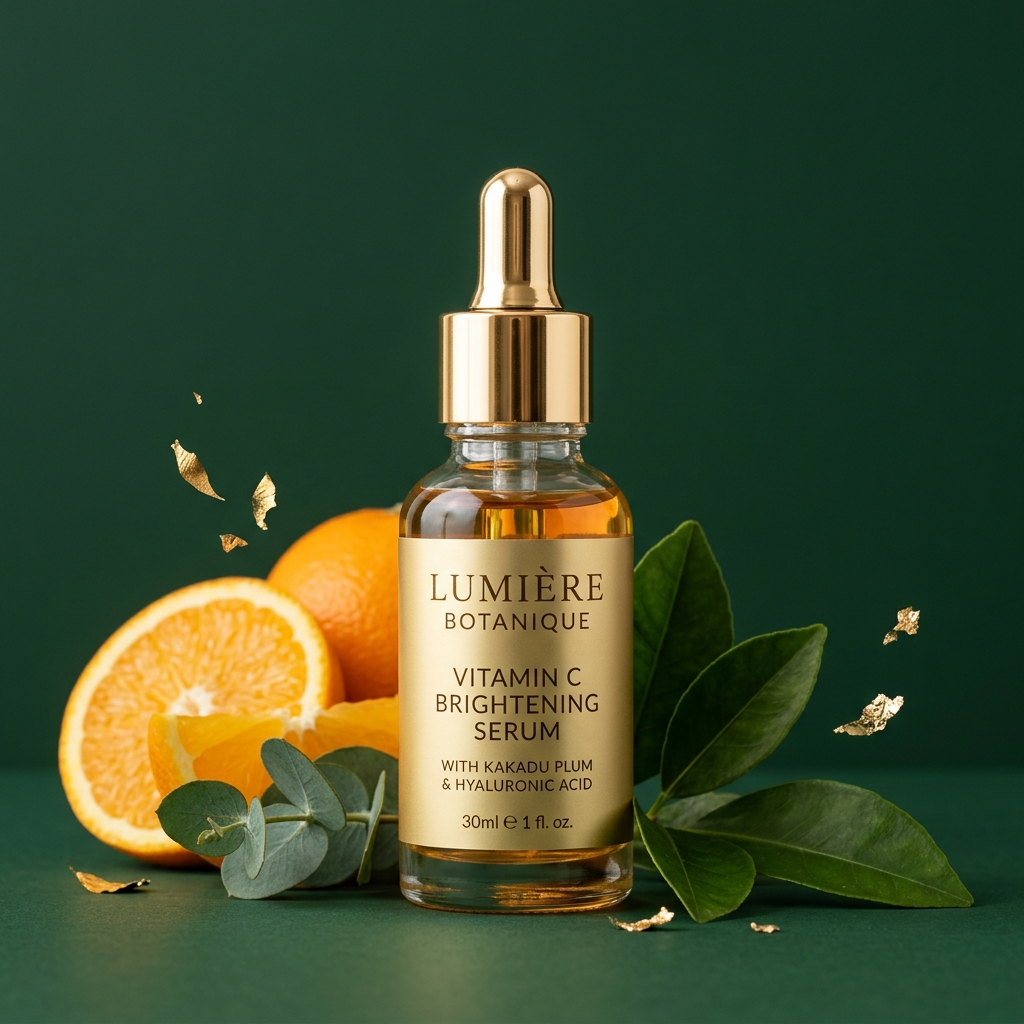
If you have spent any time researching skincare, you have almost certainly encountered the warning: do not use niacinamide and vitamin C together. The claim appears in blog posts, product guides, and countless social media videos — usually stated as settled fact, sometimes with the added detail that combining them will turn your serum into something that causes flushing.
The claim is outdated, and the science behind it has been widely misunderstood.
Niacinamide and vitamin C can be used together. Many well-formulated products now contain both. The concern originated in specific laboratory conditions that bear little resemblance to how modern skincare is formulated or used.
This guide explains where the myth came from, what actually happens when these ingredients meet, what the research supports, and how to layer them for the best results.
The Science Simplified
Yes, you can use Niacinamide and Vitamin C together. The myth that they cancel each other out is based on outdated research using unstable forms at extremely high temperatures.
Formulation Fact
Modern cosmetic chemistry has evolved significantly since the 1960s. The derivatives we use today are vastly more stable and safe to combine.
What to do
- Use modern formulas: Today's derivatives are stable together.
- Layer correctly: Apply Vitamin C (lower pH) before Niacinamide.
- Split AM/PM: If sensitive, use Vitamin C in morning, Niacinamide at night.
What to avoid
- Mixing pure forms: Don't mix raw powder forms yourself.
- Ignoring irritation: If your face flushes bright red, separate them.
- Applying on broken skin: Wait for barrier repair first.
The Short Answer
Yes, you can use niacinamide and vitamin C together. They do not neutralize each other under normal conditions, and using them in the same routine is safe for the vast majority of people.
If you have very sensitive skin and want to be cautious, separating them by time of day — vitamin C in the morning, niacinamide in the evening — is a reasonable approach. But this is a comfort preference, not a chemistry requirement.
Now for the detail, because understanding why the myth persists is useful for evaluating similar claims you will inevitably encounter.
Sensitivity Note
While chemically safe, using two potent actives simultaneously can simply overwhelm sensitive skin. If you flush, just separate them into morning and night routines.
Where the Myth Came From
The concern traces back to research conducted in the 1960s and 1970s examining the stability of niacinamide.
What that research actually found: when niacinamide and ascorbic acid are combined in a solution and exposed to heat and specific pH conditions over time, niacinamide can hydrolyze into nicotinic acid — also known as niacin.
Nicotinic acid is known to cause a temporary flushing reaction. That is the origin of the claim that combining these ingredients causes redness.
Why it does not apply to modern skincare
Several critical details separate that laboratory finding from a bottle of serum on your bathroom shelf.
The conditions were extreme. The relevant studies used pure, unformulated ingredients in aqueous solution, subjected to elevated temperatures — conditions deliberately designed to test stability limits, not to replicate typical use.
The conversion is slow and limited. Even under those conditions, the amount of nicotinic acid produced was small. At room temperature in a properly formulated product, meaningful conversion does not occur within a normal product lifespan.
Modern formulations are engineered for stability. Skincare chemistry has advanced considerably in the intervening decades. Formulators use stabilizers, appropriate pH buffering, and protective packaging. Products deliberately combining niacinamide and vitamin C are tested for exactly this concern.
Layering is not the same as combining in solution. When you apply one serum, allow it to absorb, and then apply another, you are not creating a solution in a bottle. Each product interacts with your skin, not primarily with each other.
Flushing, if it occurs, is temporary and harmless. Even in the rare case where nicotinic acid does form, the result is transient redness — not damage.
What Each Ingredient Actually Does
Understanding why pairing them is appealing requires knowing what each contributes.
Niacinamide (vitamin B3)
Niacinamide, also called nicotinamide, is a form of vitamin B3 and one of the most versatile ingredients in skincare. It is a precursor to NAD+, a coenzyme involved in cellular energy metabolism.
Documented effects:
- Strengthens the skin barrier by stimulating ceramide synthesis, reducing transepidermal water loss
- Regulates sebum production, which is why it appears frequently in products for oily and acne-prone skin
- Reduces hyperpigmentation by inhibiting the transfer of melanin from melanocytes to keratinocytes
- Calms inflammation, useful for redness, acne, and reactive skin
- Provides antioxidant support
Typical concentrations: 2% to 10%. Research supports efficacy at 2% to 5% for most concerns, with 10% offering diminishing returns and higher irritation risk.
Vitamin C (ascorbic acid)
Vitamin C is a potent antioxidant with a substantial research base in dermatology.
Documented effects:
- Neutralizes free radicals generated by UV exposure and pollution
- Supports collagen synthesis as an essential enzyme cofactor
- Inhibits tyrosinase, the enzyme initiating melanin production, which fades dark spots
- Enhances photoprotection when used alongside sunscreen
Typical concentrations: 10% to 20% for L-ascorbic acid, with 10% to 15% widely considered the practical sweet spot.
Why They Work Well Together
Once you set aside the myth, the pairing is actually well-matched.
Complementary approaches to pigmentation
This is the most compelling reason to combine them. Vitamin C and niacinamide address hyperpigmentation at different points in the same process:
- Vitamin C inhibits tyrosinase, reducing melanin production at the source
- Niacinamide blocks the transfer of melanin from melanocytes to surrounding skin cells
One reduces how much pigment is made; the other reduces how much reaches the surface. Targeting two stages of the same pathway is a sound approach.
Barrier support offsets potential irritation
L-ascorbic acid requires a low pH to work effectively, which can irritate sensitive skin. Niacinamide strengthens the barrier and reduces inflammation, which can make vitamin C more tolerable.
Layered antioxidant protection
Both provide antioxidant activity through different mechanisms, offering broader coverage against oxidative stress than either alone.
Both address multiple concerns
For anyone wanting a simple routine, this pairing covers pigmentation, barrier function, oil regulation, antioxidant protection, and collagen support with two products.
The pH Question
A more technically-minded objection sometimes raised is that these ingredients prefer different pH ranges.
The concern: L-ascorbic acid requires a pH below approximately 3.5 for effective penetration. Niacinamide is most stable around pH 5 to 7. Applying them together, the argument goes, compromises one or both.
What actually happens: your skin has considerable buffering capacity and returns to its natural pH — around 4.7 to 5.5 — within roughly 20 to 30 minutes of an acidic product being applied. Meanwhile, active ingredients begin penetrating almost immediately on contact.
The practical implication: by the time you apply a second product, the first has largely done its work. Waiting a few minutes between layers essentially eliminates this concern.
Worth noting: vitamin C derivatives such as sodium ascorbyl phosphate and magnesium ascorbyl phosphate are formulated at a skin-friendly pH, making the question irrelevant if you use one of those instead of L-ascorbic acid.
How to Layer Them Correctly
Option 1: Same routine, layered (most common)
- Cleanse
- Apply vitamin C serum to clean, dry skin
- Wait 5-10 minutes — this allows absorption and lets skin pH stabilize
- Apply niacinamide serum
- Moisturizer
- Sunscreen (morning)
The waiting period is optional for most people, but it is a sensible precaution if you have sensitive skin.
Option 2: Separate by time of day (cautious approach)
Morning: Vitamin C → moisturizer → sunscreen Evening: Niacinamide → moisturizer
This suits vitamin C’s antioxidant function well, since daytime is when environmental exposure occurs. It also eliminates any interaction concern entirely.
Option 3: A single combination product
Many formulations now include both, tested and stabilized together. This is the simplest approach and removes layering questions entirely.
What to look for: brands that disclose concentrations of both, and formulations using a vitamin C derivative alongside niacinamide, which is inherently more stable than combining L-ascorbic acid and niacinamide in one bottle.
Which goes first when layering?
Apply thinnest to thickest. If both are similar water-based serums, apply vitamin C first — L-ascorbic acid benefits most from direct contact with clean skin due to its pH requirements.
If You Do Experience Redness
Some people apply both and notice flushing. This is worth addressing, because the cause is usually not what people assume.
More likely explanations than nicotinic acid formation:
Niacinamide concentration is too high. At 10% and above, niacinamide itself causes flushing and irritation in a meaningful minority of users. Dropping to 4-5% resolves this for most people.
Vitamin C irritation. Low-pH L-ascorbic acid causes stinging and redness in sensitive skin independently of anything else in your routine.
A compromised barrier. If your skin barrier is already damaged, most actives will sting. The problem is the barrier, not the combination.
Another ingredient entirely. Fragrance, essential oils, or denatured alcohol in either product are frequent culprits.
Too much, too fast. Introducing two new actives simultaneously is a common mistake. Add one at a time, two weeks apart, so you can identify what caused any reaction.
What to do: stop both, simplify to cleanser, moisturizer, and sunscreen until skin settles, then reintroduce one product at a time at lower frequency.
What the Current Evidence Supports
On combining them: contemporary dermatological consensus holds that niacinamide and vitamin C can be used together safely. Numerous commercial formulations combine them, and the historical concern is widely regarded as a misapplication of laboratory stability data.
On efficacy: both ingredients have independent research support for pigmentation, and their complementary mechanisms provide a reasonable rationale for combining them. Research directly measuring the combined effect versus each alone is more limited — so the pairing is sensible and safe rather than definitively proven superior.
The honest framing: using them together will not harm you and is likely more effective than either alone for pigmentation concerns. It is not a miracle combination, and it will not deliver results faster than the biology allows.
Other Common “Do Not Mix” Claims
Since this myth is part of a broader pattern, here is a quick assessment of similar claims.
| Claim | Verdict |
|---|---|
| Niacinamide + vitamin C cancel out | Outdated — safe together |
| Retinol + niacinamide conflict | False — niacinamide reduces retinoid irritation |
| Vitamin C + AHA/BHA | Partly valid — increases irritation, better separated |
| Retinol + vitamin C | Partly valid — pH conflict and irritation; separate by time of day |
| Retinol + AHA/BHA | Valid — compounded irritation, alternate nights |
| Benzoyl peroxide + retinol | Partly valid — can degrade some retinoids; separate |
| Hyaluronic acid + anything | No conflict — layers freely |
The pattern worth noticing: most genuine conflicts involve compounded irritation rather than chemical neutralization. Two actives that each irritate slightly will irritate more together. That is a tolerance issue, not a chemistry failure.
Should You Actually Use Both? A Concern-by-Concern Guide
Safety is one question. Whether the pairing benefits you specifically is another.
Hyperpigmentation and dark spots
Verdict: strong case for using both. This is where the combination makes the most sense, since the two ingredients intervene at different stages of melanin production and transfer. If pigmentation is your primary concern, using both — alongside daily sunscreen — is a reasonable strategy.
Realistic timeline: 8-12 weeks for visible change, longer for stubborn or deeper pigmentation.
Oily and acne-prone skin
Verdict: niacinamide is the priority. Niacinamide’s sebum-regulating and anti-inflammatory properties are directly relevant here, while vitamin C is more of a supporting player. If you can only use one, start with niacinamide at 4-5%.
Vitamin C remains useful for fading post-inflammatory marks once active breakouts settle.
Sensitive or reactive skin
Verdict: start with niacinamide alone. Niacinamide is barrier-supporting and generally well tolerated, making it a sensible first active. Once your skin is stable, introduce a vitamin C derivative rather than L-ascorbic acid.
Adding both simultaneously to reactive skin is a reliable route to irritation you cannot attribute to either.
Dullness and uneven tone
Verdict: vitamin C is the priority. Its antioxidant activity and brightening effect address dullness more directly. Niacinamide adds barrier support and can improve overall skin quality, but vitamin C does the heavier lifting for radiance.
Early signs of aging
Verdict: vitamin C first, then consider a retinoid. Vitamin C supports collagen synthesis and provides antioxidant protection against photoaging. Niacinamide is a useful addition for barrier health, but if anti-aging is your main goal, a retinoid alongside vitamin C is a more evidence-backed pairing than niacinamide alone.
Compromised or damaged barrier
Verdict: neither, initially. If your barrier is currently compromised — stinging, flaking, persistently red — pause both and focus on repair with ceramides and a gentle routine. Reintroduce niacinamide first once things settle, since it actively supports barrier function.
Rosacea-prone skin
Verdict: proceed carefully, niacinamide first. Niacinamide’s anti-inflammatory properties can be helpful, though high concentrations may trigger flushing in some people. Low-pH vitamin C frequently aggravates rosacea; a derivative form is the safer option if you want to include it. This is a case worth discussing with a dermatologist rather than experimenting extensively on your own.
What to Look for When Buying Either Product
Choosing a niacinamide product
Concentration: 4-5% is the practical sweet spot supported by research. Products marketing 10% or 20% are not proportionally more effective, and higher concentrations increase the likelihood of flushing and irritation. If a 10% product has caused you problems in the past, a lower concentration is worth trying before writing off the ingredient.
Supporting ingredients: niacinamide pairs well with zinc (for oil control), hyaluronic acid, and ceramides. These combinations are common and sensible.
What to avoid: high concentrations combined with other strong actives in the same formula, and products where niacinamide appears far down the ingredient list despite prominent front-label marketing.
Choosing a vitamin C product
Form: L-ascorbic acid for maximum efficacy on resilient skin; sodium ascorbyl phosphate, magnesium ascorbyl phosphate, or tetrahexyldecyl ascorbate for sensitive skin.
Concentration: 10-15% for L-ascorbic acid. Higher offers minimal added benefit with meaningfully more irritation.
Packaging: opaque or amber, airless pump preferred. Clear droppers accelerate oxidation.
Supporting antioxidants: ferulic acid and tocopherol indicate a formulator who understood stability chemistry.
Choosing a combination product
If you prefer one product over two, look for formulations that pair niacinamide with a vitamin C derivative rather than L-ascorbic acid. Derivatives formulate at a skin-friendly pH, which sidesteps both the stability question and the pH mismatch entirely.
Be skeptical of products advertising both ingredients prominently while listing them near the end of the ingredient list — a trace amount of either delivers little regardless of what the front label claims.
Frequently Asked Questions
Can I use niacinamide and vitamin C at the same time? Yes. They can be layered in the same routine. Waiting a few minutes between applications is a reasonable precaution for sensitive skin but is not chemically necessary.
Do niacinamide and vitamin C cancel each other out? No. This claim originated from laboratory research using pure ingredients under heat, which does not reflect how modern products are formulated or used.
Which should I apply first? Vitamin C first, particularly if it is L-ascorbic acid, since it benefits from direct contact with clean skin. Then niacinamide, then moisturizer.
Should I wait between applying them? Five to ten minutes is a sensible buffer, especially with low-pH L-ascorbic acid. For derivative-based vitamin C, waiting is unnecessary.
Can I use a product containing both? Yes. Combination products are formulated and stability-tested specifically for this, and are often the simplest option.
Why did my skin turn red after using both? Most likely causes are high-concentration niacinamide (10% or above), low-pH vitamin C irritation, an already-compromised barrier, or another irritating ingredient in one of the products — not a reaction between the two actives.
Is it better to use them at different times of day? It is a valid approach, particularly for sensitive skin, and vitamin C suits morning use well. But it is a preference rather than a requirement.
What concentration of each should I use? Niacinamide at 4-5% suits most people, with 10% offering limited additional benefit and higher irritation risk. Vitamin C at 10-15% is the practical range for L-ascorbic acid.
Can I use both if I have sensitive skin? Often yes, but start with one at a time. Consider a vitamin C derivative rather than L-ascorbic acid, and keep niacinamide at 5% or below.
Does Vitamin C Serum Really Work? What Research Shows
Does vitamin C serum really brighten skin and fade dark spots? We break down the dermatological research.
Read More →The Bottom Line
The warning against combining niacinamide and vitamin C is one of skincare’s more persistent pieces of misinformation — a real laboratory finding stretched far beyond what it actually demonstrated.
What to remember:
- They can be used together safely. The interaction concern requires heat and conditions that do not occur in normal use.
- They complement each other by addressing pigmentation through different mechanisms.
- Layering is fine. Vitamin C first, wait a few minutes if you like, then niacinamide.
- Separating by time of day is also fine if you prefer, with vitamin C in the morning.
- If you experience redness, look at concentration, barrier health, and other ingredients before blaming the combination.
More broadly, this is a useful case study in how skincare claims propagate. A specific finding under specific conditions gets simplified, repeated, and eventually stated as universal fact. When you encounter a confident “never mix these” claim, it is worth asking what the original evidence actually showed.
This article is for informational purposes only and does not constitute medical advice. If you experience a persistent reaction to any skincare product, consult a board-certified dermatologist.
Was this article helpful?

Anam Ahsan
Founder & Editor-in-ChiefI started Glam Rock Web because I was tired of beauty content that read like advertising. Everything published here is researched, tested where possible, and written to be useful — not to sell you something.



Comments (24)
Hannah W.
2 days agoThis guide saved me so much money — went with the budget pick and honestly can't tell the difference from serums twice the price!
Anam Ahsan Author
1 day agoSo glad it worked out for you, Hannah! That's exactly the kind of result we hoped readers would see.