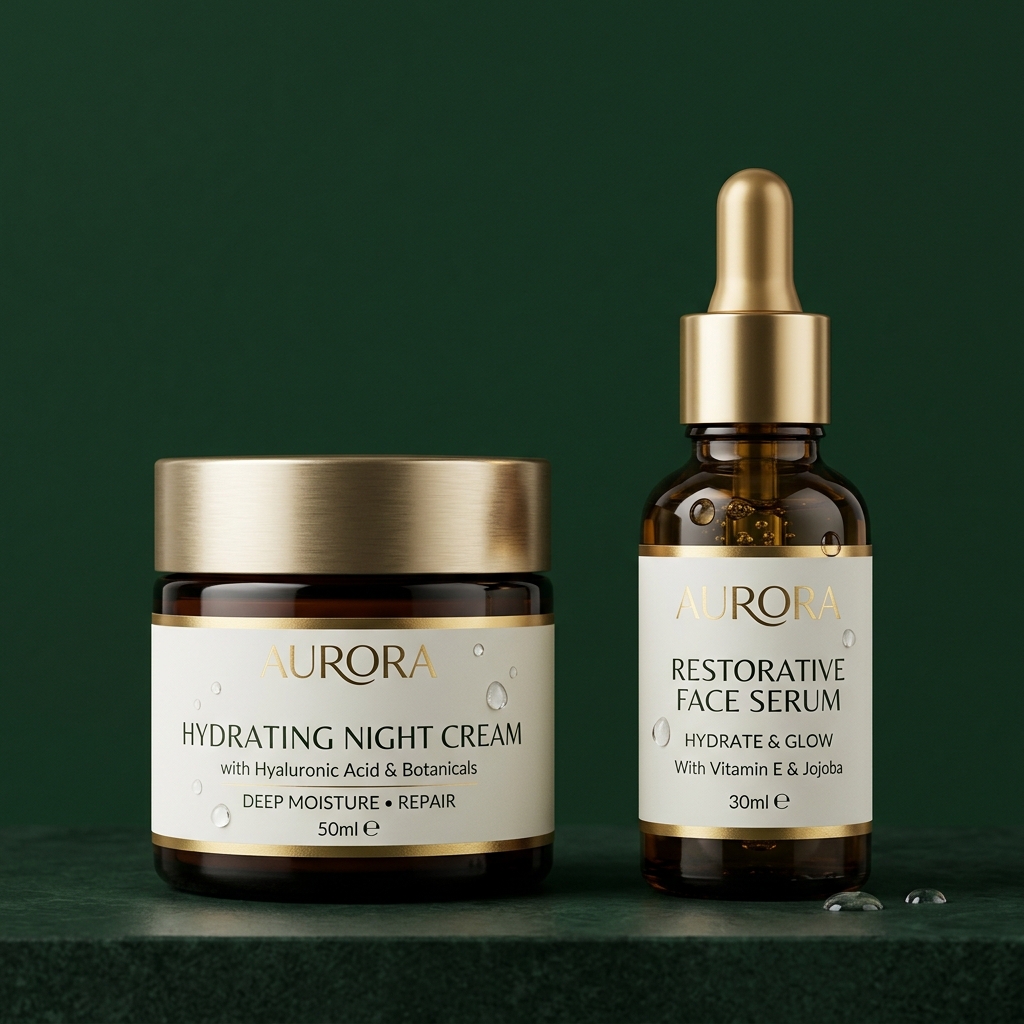
Hyaluronic acid is in almost everything — serums, moisturizers, cleansers, sheet masks, even sunscreens. It has a reputation as a universally beneficial hydrator that cannot go wrong.
Except it can, and it does, reasonably often. A recurring complaint is that hyaluronic acid appears to make skin drier rather than more hydrated, leaving it feeling tight after application.
That is not a defective product or an unusual reaction. It is a predictable consequence of how humectants work, and it happens when hyaluronic acid is applied without the conditions it needs to function.
This guide covers what hyaluronic acid actually does, why it sometimes backfires, and exactly how to apply and layer it so it works the way it is supposed to.
Key Takeaway
Hyaluronic acid doesn’t create moisture; it binds to it. If you apply it to dry skin in a dry climate without sealing it in, it will pull water out of your skin, leaving it drier than before.
What Hyaluronic Acid Actually Does
Hyaluronic acid is a glycosaminoglycan that occurs naturally in the human body, concentrated in the skin’s dermis, joints, and eyes. In skin, it forms part of the extracellular matrix and contributes to hydration and volume.
In skincare, hyaluronic acid functions as a humectant — a hygroscopic molecule that binds and holds water. It is often described as holding up to a thousand times its weight in water, which is technically accurate under laboratory conditions if not especially meaningful in practice.
The critical distinction: it does not create moisture
This is the point that resolves most confusion about hyaluronic acid.
A humectant moves water. It does not produce it.
Hyaluronic acid draws water from wherever it can find it and holds it in the stratum corneum. That water comes from one of three sources:
- The product itself, if applied in a hydrating formulation
- The ambient air, if humidity is sufficient
- Deeper layers of your own skin, if the first two are unavailable
That third source is the problem. In a dry environment, applied to dry skin, with nothing sealing it in, hyaluronic acid can draw water upward from deeper skin layers — where you needed it — and then allow it to evaporate from the surface.
The net result is skin that feels tighter than before you applied anything. Which is exactly the complaint people report.
What it does not do
It does not repair the barrier. That requires lipids — ceramides, cholesterol, fatty acids.
It does not plump from within. Topical hyaluronic acid works within the stratum corneum. Injectable hyaluronic acid fillers work in the dermis. These are entirely different interventions.
It does not treat wrinkles, pigmentation, or texture. It hydrates, which improves how skin looks temporarily. That is the whole mechanism.
Its effects are not lasting. Stop using it and the hydration effect stops within days. This is not a flaw — it simply means hyaluronic acid is a maintenance ingredient rather than a corrective one.
What to do
- Apply to damp skin: Always apply after cleansing or misting.
- Seal it in: Follow immediately with an occlusive moisturizer.
- Use in humid climates: Pulls moisture from the air into your skin.
What to avoid
- Applying to dry skin: It will pull water from your deeper skin layers.
- Skipping moisturizer: The hydration will quickly evaporate into the air.
- Using too much: High molecular weights can pill and feel sticky.
Molecular Weight: Why It Matters
Not all hyaluronic acid behaves the same way, and molecular weight is the main variable.
| Type | Molecular weight | Behaviour |
|---|---|---|
| High molecular weight | Above ~1,000 kDa | Stays on surface; forms a hydrating film; immediate plumping |
| Medium molecular weight | ~100-1,000 kDa | Partial penetration into upper layers |
| Low molecular weight | ~10-100 kDa | Penetrates further into the stratum corneum |
| Hydrolyzed / fragmented | Below ~10 kDa | Deepest penetration of the available forms |
Sodium hyaluronate is the salt form of hyaluronic acid — more stable and typically smaller, so it penetrates somewhat better. It is what most products actually contain, even when labelled as hyaluronic acid.
Why multi-weight formulas make sense: different weights act at different depths, so a serum containing several provides both surface film and deeper hydration. This is a genuine formulation rationale, not just marketing.
A caveat worth knowing: some research suggests very low molecular weight hyaluronic acid fragments may have pro-inflammatory signalling effects. Evidence is limited and mostly from laboratory contexts, and there is no established concern about cosmetic use — but it is one reason multi-weight formulations are generally preferred over exclusively ultra-low-weight ones.
The Three Rules for Using Hyaluronic Acid
Everything else follows from these.
Rule 1: Apply to damp skin
Hyaluronic acid needs water available to bind. Applying it to bone-dry skin gives it nothing to work with except your deeper skin layers.
How to do it: after cleansing, pat your face until it is damp but not dripping. Apply the hyaluronic acid serum immediately, while the surface still holds moisture.
If your skin dries too fast: mist lightly with water or a hydrating toner first, then apply.
Rule 2: Always seal it
This is the step people skip, and it is not optional.
Without an occlusive or emollient layer on top, the water hyaluronic acid has drawn to the surface evaporates — potentially taking additional moisture with it.
How to do it: follow hyaluronic acid with a moisturizer containing emollients and occlusives. Look for ceramides, squalane, dimethicone, shea butter, petrolatum, or fatty alcohols.
Applying hyaluronic acid alone as your only hydration step is the single most common mistake with this ingredient.
Rule 3: Account for your environment
Ambient humidity substantially affects how humectants behave.
In humid conditions (above roughly 60% relative humidity), hyaluronic acid can draw moisture from the air. It works well with less support.
In dry conditions — winter, arid climates, air conditioning, aeroplane cabins, heated indoor air — there is little atmospheric moisture available. Hyaluronic acid becomes more dependent on the product and on sealing.
Practical adjustments for dry environments:
- Apply to noticeably damp skin, not just slightly
- Use a richer occlusive layer on top
- Consider glycerin-based hydration instead, which is less prone to this issue
- Add a humidifier if indoor air is very dry
Where Hyaluronic Acid Goes in Your Routine
The general position
Hyaluronic acid is a water-based, lightweight product. It belongs after cleansing and any water-based actives, before moisturizer.
Morning:
- Cleanse (or rinse)
- Vitamin C or other treatment serum
- Hyaluronic acid on damp skin
- Moisturizer
- Sunscreen
Evening:
- Cleanse
- Treatment active — retinoid, exfoliant — on dry skin
- Hyaluronic acid
- Moisturizer
A timing note with retinoids and acids
Retinoids and exfoliating acids should be applied to completely dry skin, since dampness increases penetration and irritation.
This creates an apparent conflict with hyaluronic acid’s damp-skin requirement. The resolution is sequencing:
Option A: Apply the retinoid to dry skin, wait a few minutes, mist lightly or apply hyaluronic acid, then moisturizer.
Option B — better for sensitive skin: Apply moisturizer, then the retinoid, then moisturizer again (the sandwich method). Include hyaluronic acid in the first moisturizing layer.
Layering multiple hydrating products
If you use several hydrating layers — a toner, an essence, a hyaluronic acid serum — apply from thinnest to thickest, and do not let any layer dry completely before the next.
Worth being honest about: three hydrating layers do not hydrate three times as well. Most people see no meaningful benefit past one good humectant layer plus a proper moisturizer. Multiple layers are a preference, not a requirement.
What Pairs Well With Hyaluronic Acid
Hyaluronic acid has no pH conflicts and no meaningful incompatibilities. It is one of the easiest ingredients to combine.
With retinoids: genuinely useful, since hyaluronic acid offsets retinoid-related dryness. Apply the retinoid to dry skin first.
With vitamin C: no conflict. Vitamin C first on clean skin, hyaluronic acid after.
With niacinamide: complementary. Niacinamide supports barrier function while hyaluronic acid hydrates.
With exfoliating acids: helpful for post-exfoliation hydration. Apply the acid first on dry skin, then hyaluronic acid, then moisturizer.
With ceramides: an ideal pairing. Hyaluronic acid brings water in; ceramides help keep it there. This combination addresses hydration and barrier function together, which is more than either does alone.
Common Mistakes
1. Applying it to dry skin. The most frequent error, and the one that causes the “it makes my skin drier” complaint.
2. Not sealing with moisturizer. Equally common and equally counterproductive.
3. Using it as your only moisturizer. Hyaluronic acid serum is not a moisturizer. It contains no meaningful lipids and cannot support the barrier.
4. Expecting corrective results. It hydrates. It does not treat wrinkles, pigmentation, acne, or texture.
5. Layering excessively. Beyond one good humectant layer, returns diminish sharply.
6. Ignoring climate. The same routine that works in a humid summer may leave your skin tight in a dry winter.
7. Choosing based on concentration claims. A 2% hyaluronic acid serum is not twice as good as 1%. Very high concentrations can feel tacky and are not proportionally more effective. Formulation and molecular weight distribution matter more.
8. Buying an expensive one. Hyaluronic acid is a commodity ingredient. This is one of the poorest categories for price-to-performance in skincare.
Choosing a Hyaluronic Acid Product
Look for multiple molecular weights. Products listing hyaluronic acid, sodium hyaluronate, and hydrolyzed hyaluronic acid provide action at different depths.
Look for supporting humectants. Glycerin is inexpensive, extremely effective, and less prone to the drawing-from-deeper-layers issue. A serum combining glycerin and hyaluronic acid is often more effective than hyaluronic acid alone.
Look for panthenol (provitamin B5), which hydrates and supports barrier repair.
Consider a moisturizer instead of a serum. For many people — particularly those in dry climates — a moisturizer containing hyaluronic acid alongside ceramides and emollients does the job of two products more reliably.
Skip the premium options. There is very little a luxury brand can do with hyaluronic acid that an affordable one cannot.
Avoid fragrance and denatured alcohol if your skin is reactive, since these undermine the hydrating purpose.
Alternatives Worth Considering
Hyaluronic acid is not the only humectant, and for some people it is not the best one.
Glycerin is arguably the more reliable humectant. It is smaller, penetrates well, is extremely well-studied, and is less prone to the moisture-drawing problem in dry conditions. It is also very inexpensive, which is likely why it receives less marketing attention.
Panthenol hydrates while also supporting barrier repair — a dual benefit hyaluronic acid does not offer.
Urea at low concentrations hydrates; at higher concentrations it also softens keratin, making it useful for rough or thickened skin.
Beta-glucan is a humectant with some soothing research behind it, often better tolerated by reactive skin.
Polyglutamic acid is a humectant sometimes marketed as a hyaluronic acid alternative. It has reasonable evidence and forms a film on the skin, though it is typically more expensive without clearly outperforming glycerin.
If hyaluronic acid consistently leaves your skin tight despite correct application, switching to a glycerin-based hydrating serum is a sensible experiment.
How to Use It by Skin Type
The rules stay the same; what changes is what you seal it with.
Dry skin
Hyaluronic acid alone is rarely enough here. Dry skin lacks lipids, not just water, so a humectant addresses only half the problem.
Approach: apply to noticeably damp skin, then seal with a cream containing ceramides and emollients. In very dry conditions, consider adding an occlusive final layer at night.
Consider: a glycerin-based hydrating serum instead, or in addition — glycerin is more reliable in low humidity.
Oily skin
Hyaluronic acid suits oily skin well because it hydrates without adding oil. The common mistake here is skipping moisturizer entirely because the skin already feels greasy.
Approach: hyaluronic acid on damp skin, followed by a lightweight gel or gel-cream moisturizer. The sealing step still matters — a gel moisturizer with dimethicone or squalane seals adequately without heaviness.
Combination skin
Approach: hyaluronic acid across the whole face, then vary the sealing layer — a lighter moisturizer through the T-zone, something richer on drier areas.
Sensitive or reactive skin
Hyaluronic acid is generally well tolerated, but the surrounding formula matters more than the ingredient itself.
Approach: choose fragrance-free formulations with short ingredient lists. Patch test as with anything new. Pair with ceramides, which support the barrier alongside the hydration.
Acne-prone skin
Approach: a lightweight hyaluronic acid serum works well alongside actives like salicylic acid or adapalene, offsetting the dryness those cause. Follow with a non-comedogenic gel moisturizer.
Mature skin
Skin’s natural hyaluronic acid content declines with age, and barrier function tends to weaken.
Approach: multi-weight hyaluronic acid, sealed with a richer moisturizer containing ceramides and peptides. Hydration alone will not address structural changes, so pair it with a retinoid if anti-aging is the goal.
Troubleshooting
“It feels sticky or tacky.” Usually too much product, or a high concentration formula. Use fewer drops, and make sure you are applying to damp rather than dry skin. Sealing with moisturizer also resolves most tackiness.
“My makeup pills on top of it.” Give each layer time to absorb — thirty to sixty seconds. Pilling often results from applying makeup before the serum has set, or from combining water-based and silicone-based products in an incompatible order.
“My skin still feels tight after using it.” Check the two fundamentals first: damp skin and a sealing moisturizer. If both are in place and the tightness persists, your environment may be too dry for hyaluronic acid to work well — try a glycerin-based alternative.
“I don’t notice any difference.” Hyaluronic acid produces a subtle effect. If your moisturizer already contains it, adding a dedicated serum may deliver no perceptible change. That is not a failure — it may simply mean you were already adequately hydrated.
“It stings.” Hyaluronic acid itself does not typically sting. Stinging suggests another ingredient in the formula, or a compromised barrier that would react to most products. Simplify your routine and address the barrier first.
Frequently Asked Questions
Should I apply hyaluronic acid to wet or dry skin? Damp skin — patted so it is moist but not dripping. Applying to fully dry skin is the most common reason hyaluronic acid appears to dry the skin out.
Why does hyaluronic acid make my skin feel drier? Because it is a humectant that moves water rather than creating it. Without water available from the product or the air, and without a sealing layer on top, it can draw moisture from deeper skin and allow it to evaporate.
Do I need moisturizer after hyaluronic acid? Yes. This is not optional. Without an occlusive or emollient layer, the water hyaluronic acid attracts evaporates.
Can I use hyaluronic acid twice a day? Yes. It is gentle, has no pH conflicts, and can be used morning and evening.
Does molecular weight really matter? Yes. Higher weights form a surface film and give immediate plumping; lower weights penetrate further. Multi-weight formulations offer both.
Is hyaluronic acid good for oily skin? Yes. It provides hydration without adding oil, which suits oily skin well. Follow with a lightweight gel moisturizer rather than skipping the sealing step.
Can hyaluronic acid cause breakouts? Hyaluronic acid itself is not comedogenic. Breakouts after starting a serum are more likely caused by other ingredients in the formula — fragrance, certain oils, or silicones some people react to.
Is expensive hyaluronic acid better? Generally not. It is a commodity ingredient, and price correlates poorly with performance in this category.
How long does it take to see results? Hydration is immediate — within minutes to hours. There is no cumulative benefit to wait for, unlike retinoids or vitamin C.
Can I use it with retinol? Yes, and it is a useful pairing since it offsets retinoid dryness. Apply the retinoid to dry skin first, then hyaluronic acid, then moisturizer.
The Bottom Line
Hyaluronic acid is genuinely useful, widely available, inexpensive, and almost universally tolerated. It is also frequently used incorrectly, which is why so many people conclude it does not work for them.
The three things that determine whether it works:
- Apply to damp skin — it needs water available to bind
- Always seal with moisturizer — otherwise the water evaporates
- Adjust for your climate — dry air changes the equation significantly
And a realistic expectation: hyaluronic acid hydrates. It does not repair, correct, or transform. Hydrated skin looks better — plumper, smoother, more radiant — but that effect is maintenance rather than treatment, and it stops when you stop.
If hyaluronic acid has left your skin feeling tight, you have almost certainly not been doing anything wrong in a broad sense. You have most likely been applying it to dry skin, skipping the sealing step, or both — and both are easy to fix.
This article is for informational purposes only and does not constitute medical advice. If you have persistent dryness, irritation, or a diagnosed skin condition, consult a board-certified dermatologist.
Was this article helpful?

Anam Ahsan
Founder & Editor-in-ChiefI started Glam Rock Web because I was tired of beauty content that read like advertising. Everything published here is researched, tested where possible, and written to be useful — not to sell you something.



Comments (24)
Hannah W.
2 days agoThis guide saved me so much money — went with the budget pick and honestly can't tell the difference from serums twice the price!
Anam Ahsan Author
1 day agoSo glad it worked out for you, Hannah! That's exactly the kind of result we hoped readers would see.